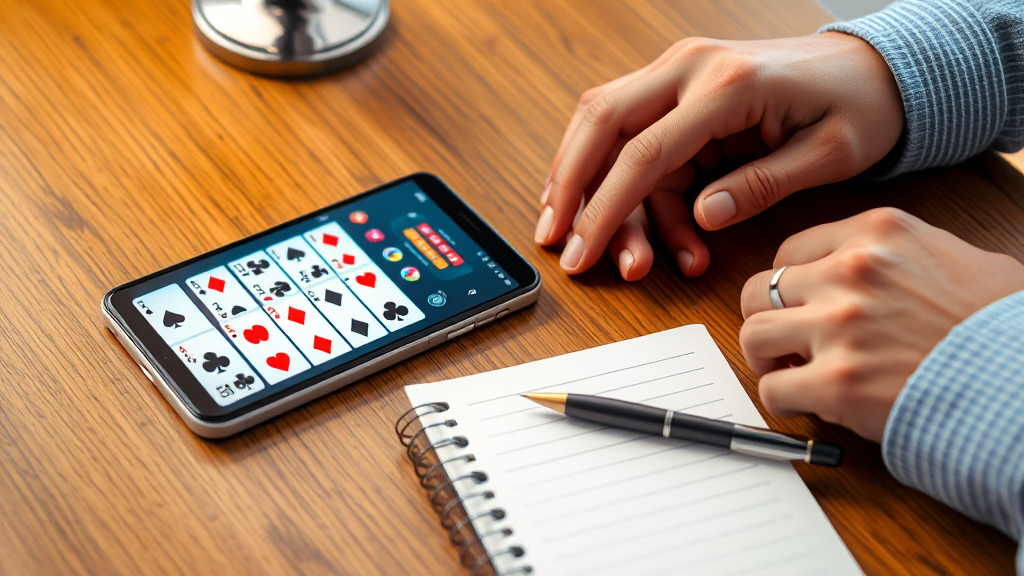
Rummy Skill Hub: A Practical Guide to Building Real Card Sense
Rummy looks simple from the outside. You pick a card, you discard a card, and you arrange sets and sequences. Yet the players who win consistently are not doing anything mysterious — they are applying a set of repeatable skills that anyone can learn. That is the idea behind a proper Rummy Skill Hub: a place where the focus shifts from luck to learning, and where the tools you use matter as much as the effort you put in. This guide breaks down what skill actually means in rummy, how to train it, and how to choose an Android app that supports real improvement rather than just filling time.
Whether you are picking up the game for the first time or you have been playing casually for years, the same principles apply. You need to understand the mechanics deeply, read your hand honestly, manage risk deliberately, and review your decisions afterwards. None of that requires talent. It requires structure.
What “Skill” Really Means in Rummy
When people say rummy is a game of skill, they usually mean it in a vague, encouraging way. In practice, skill in rummy splits into four distinct abilities, and each one can be trained separately.
Hand evaluation is the first. Before you draw a single card, you should be able to look at thirteen cards and form a rough plan. Which cards are close to becoming melds? Which are isolated and likely to be discarded? Strong players do this in seconds because they have seen thousands of hand shapes and recognise the patterns instantly.
Discard discipline is the second. Beginners discard the card that looks least useful in isolation. Experienced players discard the card that is least useful and least likely to help an opponent. That second consideration is where a lot of games are quietly won and lost.
Probability reading is the third. You do not need to calculate exact odds at the table, but you should have a working sense of which cards are still live, which suits are running thin, and how likely a particular draw is to complete your meld.
Decision-making under pressure is the fourth. Rummy involves repeated small decisions, and the players who stay calm and consistent across a long session usually outperform those who make one brilliant move and then three careless ones.
Building a Daily Practice Routine
Skill does not accumulate simply by playing more. It accumulates by playing with intention. A short, focused session is worth more than a long, distracted one.
Start with a warm-up. Play a few hands where your only goal is to identify your best meld immediately after the deal. Do not worry about winning. Just practise the recognition step until it becomes automatic.
Then move to a decision drill. Play a full game but pause before every discard and ask yourself two questions: what does this card do for me, and what could it do for my opponent? This slows you down at first, which is exactly the point. The goal is to make the reasoning habitual so it eventually happens at normal speed.
Finish with a review. Pick one hand from the session and reconstruct it. Where did your plan change? Was the change justified, or did you react to a single unlucky draw? Written notes are not necessary, but a mental replay of one hand per session compounds quickly over weeks.
Choosing an Android App That Supports Skill Development
The app you practise on shapes the habits you build. A poorly designed interface encourages rushed play; a clear one encourages thinking. This is where a discovery and comparison resource becomes genuinely useful. Rather than installing the first app you see, it helps to browse curated categories and compare how different Android rummy apps present information, organise tables, and handle the flow of a game.
When comparing options, look at four things. First, clarity of the interface — can you see your hand, the discard pile, and the table state without strain? Second, pace control — does the app let you think, or does it push you to act instantly? Third, feedback — does it show you what happened clearly at the end of a hand? Fourth, consistency — does the app behave the same way every session, so you can actually learn from repetition?
An app that scores well on all four is a better training environment than one that merely looks impressive. The point is not to find the most feature-packed option, but the one that lets you concentrate on decisions rather than on the software.
Common Mistakes That Slow Down Improvement
Most players plateau for predictable reasons. Recognising these patterns is often enough to break through them.
Chasing a single meld. Holding on to a nearly complete sequence for too long is one of the most common errors. If the needed card is unlikely to appear, the meld is not nearly complete — it is a liability.
Ignoring the discard pile. The discard pile is a record of what has been thrown away. Players who never read it are effectively playing with partial information.
Playing too fast. Speed feels productive, but in rummy it usually means skipping the evaluation step. Slower, deliberate play produces better long-term results.
Changing strategy every hand. Consistency matters. If you switch approach after every bad result, you never give any approach time to prove itself.
Neglecting the endgame. The final few turns of a hand often decide the outcome. Players who relax once their meld looks safe tend to lose close games.
Reading the Table, Not Just Your Hand
Your hand is only half the picture. The other half is what your opponents are doing, and you can infer a surprising amount from public information.
Watch which cards are being picked up and which are being passed over. A player who consistently draws from the discard pile is building something specific. A player who never does may be holding a hand that is already close to complete. Neither observation is conclusive on its own, but together they form a picture.
Also track the pace of discards. A player who suddenly slows down is often deciding between two competing plans. A player who speeds up may have completed a meld and be looking to finish. These are small signals, but they accumulate into useful reads over the course of a session.
This kind of table awareness is the difference between playing your own cards and playing the game. It is also the skill that transfers most directly between different apps and formats, because it depends on observation rather than on any particular interface.
Using Comparison Resources Wisely
A comparison directory is not a shortcut to skill, but it removes a lot of wasted effort. Instead of installing and uninstalling apps at random, you can review curated categories, read editorial signals, and narrow your options before committing time to any single platform.
The key is to treat the comparison as a starting point, not a verdict. An app that suits one player may not suit another, because preferences around pace, layout, and feedback vary. Use the directory to build a shortlist, then test each option with a few focused sessions and judge for yourself.
For adults 18 and over who are exploring Android rummy apps, this approach saves time and reduces the chance of settling into a platform that does not match how you like to think. The best training environment is the one you will actually use consistently.
Tracking Progress Without Obsessing Over Results
Results matter, but they are a noisy signal in the short term. A single session tells you very little. What tells you more is whether your decisions are improving.
Keep a simple mental scorecard. Did you evaluate your hand before discarding? Did you read the discard pile? Did you avoid chasing unlikely melds? If you can answer yes to those questions more often this month than last month, you are improving, regardless of how any individual hand turned out.
This mindset also protects you from tilt. Players who measure themselves purely by wins and losses become frustrated quickly, and frustration leads to rushed decisions. Players who measure themselves by process stay steady, and steady players make better choices over time.
Frequently Asked Questions
Is rummy really a skill-based game?
Yes. Luck affects individual hands, but over many hands the players who evaluate hands well, discard carefully, and read the table consistently outperform those who do not. Skill expresses itself over repetition rather than in any single deal.
How long does it take to see improvement?
Most players notice clearer decision-making within a few weeks of focused practice. The biggest early gains come from simply slowing down and evaluating before every discard. Deeper table-reading skills take longer to develop.
Do I need a specific app to practise?
No single app is required, but the platform you choose does matter. A clear interface and a reasonable pace make it easier to build good habits. Comparing options before committing helps you find a suitable environment.
What is the most common mistake beginners make?
Chasing a nearly complete meld for too long. Beginners often hold on to a hand shape that looks promising but is unlikely to finish, while ignoring better options that are already available.
Can I improve without playing against others?
Partly. Solo practice helps with hand evaluation and discard discipline, but table reading requires opponents. A mix of both is the fastest route to well-rounded skill.
Final Thoughts
Rummy rewards patience more than brilliance. The players who improve fastest are not the ones who find secret strategies — they are the ones who practise deliberately, review honestly, and choose tools that support clear thinking. A skill-focused approach turns a casual pastime into something genuinely rewarding, and it makes every session more interesting than the last.
Start with one habit: evaluate before you discard. Build from there. Over time, the small decisions add up, and the game becomes less about what you are dealt and more about what you do with it.