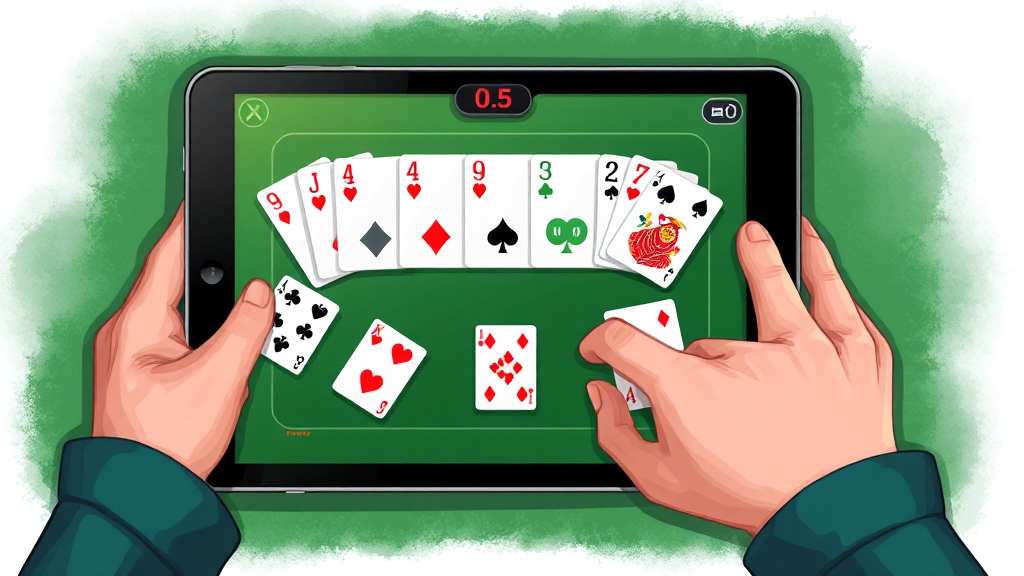
Online Rummy Game: A Complete Beginner’s Guide to Rules, Strategy and Smart Play
Card games have a way of bringing people together, and few formats have adapted to the digital world as smoothly as rummy. What was once a pastime played across kitchen tables and during long train journeys is now a thriving online activity enjoyed by millions of players around the world. If you have been curious about the Online Rummy Game, this guide will walk you through everything you need to know — from the basic rules and card values to the strategies that separate casual players from confident ones. Whether you are completely new to rummy or returning after a long break, the information below will help you approach the game with clarity and confidence.
What Exactly Is an Online Rummy Game?
At its core, rummy is a skill-based card game where players aim to arrange their cards into valid sets and sequences before their opponents do. An online rummy game takes that same foundation and moves it to a digital platform, where you play against real opponents or computer-generated players through an app or website. The rules remain largely the same, but the experience changes in several meaningful ways.
For starters, online rummy removes the need for physical cards, shuffling, and scorekeeping by hand. The platform handles all of that automatically, which means you can focus entirely on your hand and your decisions. You also get access to features like timers, auto-arrangement suggestions, and detailed game statistics that would be difficult to track in a physical setting. Many platforms also offer practice tables, tutorials, and different variants of the game, making it easier for newcomers to learn at their own pace.
Another advantage is convenience. You can play a quick match during a lunch break, join a longer session in the evening, or practice late at night — all without needing to gather a group of people in one place. This flexibility is a big reason why online rummy has grown into such a popular digital card game.
The Basic Rules Every Player Should Know
Before you dive into strategy, it helps to understand the fundamental rules that govern most rummy variants. While specific formats like Points Rummy, Pool Rummy, and Deals Rummy have their own scoring systems, the core mechanics stay consistent.
The deck and deal: Most online rummy games use one or two standard decks, including jokers. Each player is dealt a set number of cards — commonly thirteen in the popular Indian variant — and one card is placed face-up to start the discard pile. The remaining cards form the closed deck.
Sets and sequences: A set is a group of three or four cards of the same rank but different suits, such as three kings from different suits. A sequence is three or more consecutive cards of the same suit. A pure sequence contains no joker, while an impure sequence uses a joker or a printed joker to fill a gap. In most variants, at least one pure sequence is mandatory before you can declare your hand.
Drawing and discarding: On each turn, you draw a card from either the closed deck or the open discard pile, then discard one card from your hand. This cycle continues until a player forms a valid hand and declares.
Jokers: Jokers act as wild cards that can substitute for any card you need to complete a set or sequence. Understanding how to use jokers efficiently is one of the most important skills in rummy.
Declaring: When you believe your hand is valid, you declare by arranging your cards into sets and sequences. If your declaration is correct, you win the round. If it is invalid, you may incur a penalty depending on the rules of the specific game.
Popular Online Rummy Variants Explained
One of the appealing things about online rummy is the variety. Different variants offer different pacing, risk levels, and scoring structures, so players can choose what suits their style.
Points Rummy: This is a fast, single-deal format where each point has a fixed value. It is ideal for players who want quick matches and immediate results. Because it ends after one deal, Points Rummy is often recommended for beginners who are still learning the flow of the game.
Pool Rummy: In this variant, players pay a fixed entry amount that goes into a prize pool. The game continues over multiple deals until a player reaches a predetermined score limit and is eliminated. The last remaining player wins the pool. Pool Rummy rewards patience and consistency over several rounds.
Deals Rummy: Here, players compete over a fixed number of deals, and the player with the highest total score at the end wins. This format balances short-term decision-making with longer-term score management.
Rummy 500 and other regional styles: Some platforms also offer variations like Rummy 500, where card values differ and the game continues until a target score is reached. These variants add variety for players who want a different challenge.
Exploring a few variants is a great way to find the format that matches your preferred pace and level of involvement.
Strategies That Improve Your Game Over Time
Rummy is often described as a game of skill, and that skill comes from making smart decisions consistently rather than relying on luck alone. Here are some practical strategies that can help you improve.
Prioritise your pure sequence: Since most variants require at least one pure sequence to declare, building that early should be your first goal. Without it, even a hand full of strong sets will not be valid.
Watch the discard pile: The cards your opponents discard tell a story. If you notice that low-value cards are being discarded frequently, it may indicate that players are holding high cards or building specific sequences. Paying attention to the discard pile can help you decide which cards to pick up and which to let go.
Do not hoard jokers: Jokers are powerful, but holding them too long without using them can slow down your progress. Use jokers strategically to complete sequences and sets rather than saving them indefinitely.
Keep your options open: Avoid committing too early to a single sequence or set. Flexible hands that can be rearranged in multiple ways give you more chances to adapt as the game progresses.
Manage your high cards: High-value cards increase your score if you lose the round, so discarding them early when they do not fit your plan can reduce your risk. However, do not discard a high card that could complete a valuable set or sequence.
Practice regularly: Like any skill, rummy improves with repetition. Practice tables and low-stakes games are excellent ways to test strategies without pressure.
Choosing a Platform and Playing Responsibly
When you decide to play online rummy, the platform you choose matters. Look for apps and websites that clearly explain their rules, offer transparent scoring, and provide helpful features like practice modes, tutorials, and responsive customer support. Reading reviews and comparing listing details can help you find a platform that matches your needs.
It is also important to approach any online card game responsibly. Set a budget for your time and attention, take breaks between sessions, and treat the game as entertainment rather than a source of income. Most reputable platforms include responsible-play tools and age restrictions, and they encourage players to use them. If you ever feel that the game is becoming stressful rather than enjoyable, stepping away is always a smart choice.
Finally, remember that rummy is ultimately a social and mental exercise. The thrill comes from reading the table, planning your moves, and improving your decision-making over time. Keeping that perspective helps you enjoy the game for what it is — a challenging and rewarding card game that you can play anytime, anywhere.
Frequently Asked Questions About Online Rummy
Is online rummy a game of skill or luck?
Rummy is widely regarded as a skill-based game. While the cards you receive are random, your success depends heavily on how you arrange them, which cards you discard, and how well you read your opponents’ moves. Over many games, skilled players tend to perform more consistently than beginners.
How many cards are dealt in a typical online rummy game?
In the most common variant, each player receives thirteen cards. The exact number can vary depending on the specific format and platform, so it is always a good idea to check the rules before you start playing.
What is the difference between a pure sequence and an impure sequence?
A pure sequence is three or more consecutive cards of the same suit without any joker. An impure sequence uses a joker or a printed joker to substitute for a missing card. Most variants require at least one pure sequence before you can declare your hand.
Can beginners play online rummy without spending money?
Yes. Many platforms offer practice tables, free games, and tutorials that let you learn the rules and build confidence before playing in paid formats. Starting with free games is a sensible way to understand the flow of the game.
How can I improve my online rummy skills?
Focus on building a pure sequence early, observe the discard pile carefully, use jokers wisely, and keep your hand flexible. Regular practice and reviewing your decisions after each game can also help you improve steadily over time.